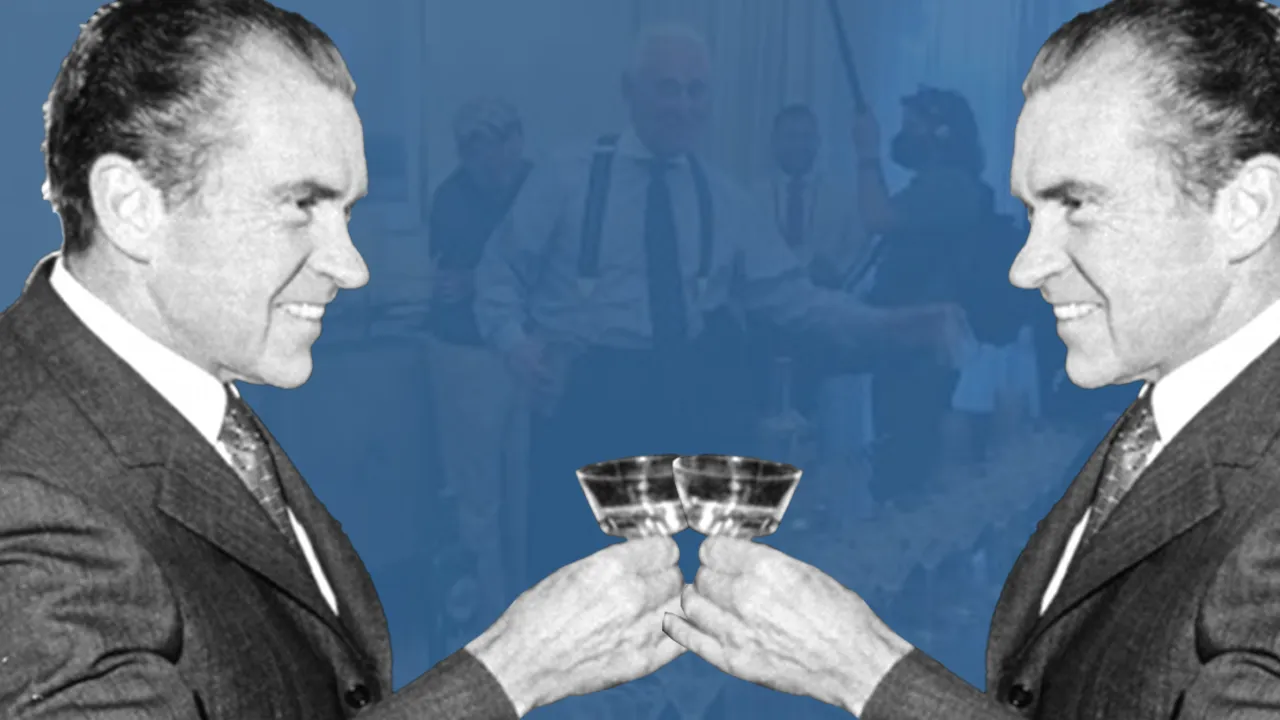
Few inventions in American history have inspired as much fascination, debate, imitation, and outright obsession as the martini. Entire books have been written about it. Friendships have been forged over it. Business deals have been consummated because of it. Political alliances have been cemented while sipping it. The martini is not merely a cocktail. It is a cultural institution, confidence, sophistication, and occasionally excess. Like the Colt revolver, the Lincoln Continental, and the American flag itself, the martini has become one of those uniquely American icons whose influence extends far beyond its original purpose.
Yet despite its legendary status, nobody can say with certainty who invented the martini. Its origins remain cloaked in mystery, disputed by bartenders, historians, cocktail enthusiasts, and self-appointed experts who have spent generations arguing over its provenance. The most widely accepted theory traces the drink back to Gold Rush era California, where a cocktail known as the Martinez emerged sometime during the middle of the 19th century. According to legend, a traveler celebrating a successful mining venture requested a special drink from a bartender in Martinez, California. Lacking champagne, the bartender combined Old Tom gin, sweet vermouth, maraschino liqueur, bitters, and citrus peel. The resulting concoction became known as the Martinez, which many historians consider the direct ancestor of the modern martini.
Others credit the legendary bartender Jerry Thomas, often called the father of American mixology, with refining or popularizing an early version of the drink while working in San Francisco. Still others insist the cocktail evolved gradually from various gin and vermouth combinations that were becoming fashionable throughout America during the latter half of the nineteenth century. Like the authorship of Shakespeare’s plays or the identity of Jack the Ripper, the true origin story remains tantalizingly elusive. What is beyond dispute is that by the end of the 19th century, the martini had arrived and America would never be the same.
The earliest martinis would be almost unrecognizable to many modern drinkers. They were considerably sweeter than today’s versions and often contained sweet vermouth rather than dry vermouth. Some recipes included maraschino liqueur, orange curaçao, and aromatic bitters. These early cocktails possessed a complexity and sweetness that reflected Victorian tastes. Over time, however, the drink evolved. Sweet vermouth gradually gave way to dry French vermouth. Old Tom gin yielded to the cleaner, sharper profile of London dry gin. Bartenders reduced the amount of vermouth, producing a drier and more spirit forward cocktail. By the early 20th century, the modern martini had emerged from its sweeter ancestor much the way a butterfly emerges from a chrysalis.
The martini achieved its greatest popularity during the 1950s and early 1960s. This was the era of gray flannel suits, corner offices, country clubs, steak houses, and boundless American optimism. Corporate executives, newspaper publishers, attorneys, politicians, military officers, and financiers all embraced the martini as the preferred beverage of success. The famous three martini lunch became a fixture of American business culture. Contrary to the caricature often promoted today, these lunches were not simply excuses for drunkenness. They were networking sessions, negotiating tables, strategy meetings, and relationship building exercises rolled into one. Deals worth millions of dollars were discussed over martinis. Political campaigns were planned over martinis. Careers were launched and occasionally destroyed over martinis. The cocktail became the unofficial beverage of postwar American prosperity.
The great debate within martini culture concerns the choice between gin and vodka. Traditionalists insist that a true martini must be made with gin. They argue that gin’s botanical complexity, with its notes of juniper, citrus, coriander, and herbs, creates the distinctive character that defines the drink. Vodka enthusiasts counter that vodka provides a cleaner canvas, allowing the drink’s texture, temperature, and garnish to take center stage. The vodka martini surged in popularity after World War II as vodka brands aggressively marketed themselves to American consumers seeking something modern and sophisticated. The trend accelerated when James Bond famously ordered his martinis shaken rather than stirred. Purists may wince at the sight of a vodka martini, but the reality is that both versions have earned a permanent place in cocktail history.
A proper martini should be served ice cold in a thoroughly chilled glass. The glass itself should be frosted from time spent in the freezer. The cocktail should be either stirred or shaken with abundant ice and then strained into the glass without any cubes remaining. Every element should emphasize crispness and temperature. A lukewarm martini is as disappointing as a flat champagne or an overcooked steak. The drink should be elegant, pristine, and cold enough to make the glass sweat with anticipation.
Equally important is the garnish. Entire friendships have probably ended over disagreements concerning olives versus lemon twists. My own preference follows the example of President Richard Nixon, whose appreciation for martinis was legendary. Among olive aficionados, the large Spanish Queen olive remains the gold standard. Its firm texture, buttery flavor, and substantial size complement the martini beautifully. The olive should never be an afterthought. It is the final note in a carefully composed symphony. A mediocre olive can diminish an otherwise excellent martini just as a poor violinist can spoil a magnificent orchestra.
One of the most fascinating martini recipes ever devised came from President Richard Nixon, who developed a preparation known as the “Silver Bullet Martini” which I not only speak of often, but have also written about in my book “Stone’s Rules”. Unlike many modern concoctions that resemble chemistry experiments conducted by intoxicated graduate students, Nixon’s recipe embodied simplicity, discipline, and precision. The process begins with a jar of small or medium green olives stuffed with pimento. The original brine is poured out completely. The olives are then rinsed thoroughly by filling the jar with water, shaking vigorously, and draining it several times. Once every trace of brine has been removed, the jar is refilled entirely with dry French vermouth and placed in the refrigerator. The olives remain submerged in the vermouth, absorbing its flavor over time.
When preparing the drink itself, Nixon would place a generous quantity of ice into a cocktail shaker, preferably one made of silver or aluminum. He would then add approximately three fingers of premium vodka or, more commonly, Tanqueray gin. The mixture would be shaken vigorously until the outside of the shaker became frosty and tiny shards of ice appeared within the liquid. A martini glass, previously chilled in the freezer, would then be filled with the strained cocktail. No vermouth was added directly to the drink. Instead, Nixon would place two or three of the vermouth soaked olives into the glass. The olives supplied all the vermouth essence the cocktail required. The result was astonishingly dry, extraordinarily cold, and possessed of a subtle complexity that conventional martinis often lack. Nixon believed the vermouth belonged in the olives rather than in the glass itself.
There is something wonderfully Nixonian about this recipe. It was practical, understated, highly disciplined, and entirely devoid of unnecessary ornamentation. While other cocktail enthusiasts debated ratios and measurements with theological fervor, Nixon devised a method that bypassed the argument altogether. The vermouth was present, yet almost invisible. The drink possessed character without ostentation. It reflected the personality of a man who was often underestimated by his adversaries but who understood the value of preparation, precision, and strategic thinking.
Today, the martini continues to evolve. There are dirty martinis, filthy martinis, perfect martinis, Gibsons, Vespers, espresso martinis, and enough flavored variations to fill an encyclopedia. Some are excellent. Others are crimes against civilization. Yet through all these transformations, the essential appeal of the martini remains unchanged. It is a drink that rewards quality over quantity, craftsmanship over gimmickry, and elegance over excess. More than a century after its disputed birth, the martini remains the undisputed king of cocktails, a timeless symbol of American confidence, refinement, and achievement. Long after today’s trendy beverages have vanished into obscurity, the martini will endure, standing proudly at the bar like a perfectly tailored tuxedo in a room full of sweatpants.